
"Xincheng Farm"
58 article(s) found

Description of Flavor of Yunnan small Grain Coffee Iron pickup Coffee introduction to the taste of fine coffee beans in producing areas
Yunnan can be said to be the only province that still grows Arabica on a large scale, mainly in Dehong Lincang, Baoshan, western Yunnan and Pu'er Banna in southern Yunnan. Robusta was the main coffee introduced by missionaries in the 19th century, and then it was no longer planted on a large scale. In the 1950s, experts assisted by the Soviet Union put two mainstream Arabica varieties in the world: typica and Bo.

Introduction to the taste of Yunnan Tieka coffee beans produced by grinding scale and regional treatment method
Yunnan Tieka coffee bean grinding scale production area treatment method introduces the environmental problems of coffee planting, although it can reach the hot area standard, it is far away from the equator, the problem of evaporation, and the large-scale Yunnan coffee planting area is less than 1100m above sea level. in recent years, the severe drought in Yunnan, as well as the frost period in the producing areas, all make the cultivation of coffee can not be guaranteed normally, which directly affects the quality of coffee production.

Introduction to the quality of Yunnan small Coffee Flavor description of Tieka Coffee Manor
The separatist forces were eliminated in the Sui Dynasty, Yunnan was put back under the direct rule of the central government, and then in the early Tang Dynasty, it basically restored the scale of counties and counties in the Han and Jin dynasties. In 707 AD, the Tang Dynasty defeated the Tubo expansion forces invading Erhai Lake in the south, established iron pillars to record meritorious service, supported Nanzhao to unify Erhai area in 738 AD, and canonized Polo Pavilion as the king of Yunnan. The territory of Nanzhao period was bordered by Guizhou in the east and Yiluo in the west.

Yunnan Baoshan small grain coffee brewing _ where is Baoshan coffee base _ Baoshan Xinzhai coffee how much is it
Professional coffee knowledge exchange more coffee bean information Please follow the coffee workshop (Wechat official account cafe_style) in fact, on my first trip to Yunnan more than a decade ago, I bought a bag of Yunnan small coffee beans in Lijiang. When I came back, I felt very good, and the quality was better than that of many foreign varieties of coffee, but for many years later, I seldom drank Yunnan coffee, and I usually came into contact with all kinds of coffee.

Yunnan Baoshan Coffee Bean Brand Yunnan Coffee Why is there a good Yunnan small Coffee?
Professional coffee knowledge exchange more coffee bean information please follow the coffee workshop (Wechat official account cafe_style) Yunnan small coffee how to brew as a coffee control, favorite is delicious all kinds of coffee. When I came to Baoshan, Yunnan Province this time, I unexpectedly tasted one of the best coffee I have tasted in recent years. In fact, I made my first trip to Yunnan more than ten years ago, in Lijiang.

A brief introduction to the History and Culture of the Origin and Development of Yunnan small Coffee Huaguoshan Coffee
In addition, although the environmental problems of coffee cultivation can meet the standards of hot areas, they are far away from the equator, evaporation, large-scale coffee cultivation in Yunnan is less than 1100m above sea level, the severe drought in Yunnan in recent years, and the frost period in the producing areas, and so on, all make the cultivation of coffee can not be guaranteed normally, directly affecting the quality of coffee production. As for other processing problems and the quality of farmers, let alone say so.

About 'what is the quality of Yunnan small-grain coffee?' The essence of the answer
Professional baristas exchange please follow the coffee workshop (Wechat official account cafe_style) a little knowledge of the fields. Yunnan small grain coffee, that is, Yunnan Arabica coffee, now belongs to an awkward position in the international market as well as in China. For example, coffee shops rank low in individual coffee, and the cheapest coffee is Yunnan coffee.
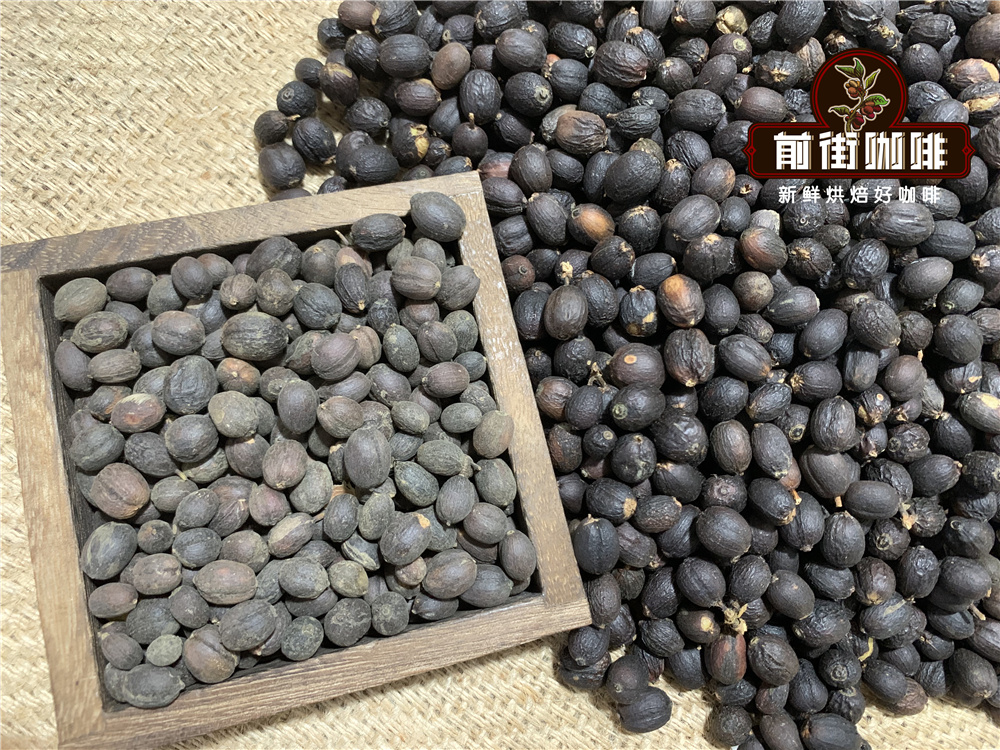
Yunnan Coffee Bean Variety Yunnan Coffee producing area History Story description of flavor and taste characteristics of 2013 small grains of coffee in Qianjie
For the future, local governments in Yunnan have also drawn a blueprint: Dehong is planning to expand the coffee planting area from the current 100000 mu to 200000 mu in the next few years; Lincang plans to expand the existing 20, 000 mu coffee forest by 10 times to 200000 mu in the 12th five-year Plan; Pu'er also plans to expand the 220000 mu coffee forest to

A brief introduction to the planting Market Price of Fine Coffee Bean varieties with strong aroma
Bourbon coffee is a variety of small-grain coffee second only to Tibica. At first, the main branch and the trunk grew upward at 45 degrees, and drooped with fruit load, the lateral branches were denser, the fruit was more, and the yield was higher. But the berries are smaller and ripen more slowly. The tender leaves of the terminal buds of Bobang are green, which is called green top coffee. Catimor is an improved variety of Tibica, and 25% Robusta genetic coffee is.
Yunnan coffee beans main origin ranking introduction which brand is good Lincang Baoshan Pu 'er Dehong small coffee flavor characteristics Description
Professional coffee knowledge exchange More coffee bean information Please pay attention to coffee workshop (Weixin Official Accounts cafe_style) Yunnan small coffee is more popular in our country. Rubiaceae, coffee, mainly distributed in Lincang, Baoshan, Simao, Xishuangbanna, Dehong, Nujiang and other prefectures. Yunnan superior

Exquisite Yunnan small grain coffee which brand of Yunnan coffee is better which brand of Yunnan coffee is better
A little knowledge of the fields. Yunnan small-grain coffee, that is, Arabica coffee, now belongs to an awkward position in the international market as well as in China. For example, coffee shops rank low in individual coffee, and the cheapest coffee is Yunnan coffee. This is an issue that cannot be avoided. Since you ask the landlord what is the difference between the main producing areas and the main producing areas, tell me about the varieties.

The bottleneck in the development of Baoshan small-grain coffee is the key to improve the processing level.
It is understood that Baoshan small grain coffee is the earliest product in line with the market and the international market. It has been rated as the best coffee in the world by world-class coffee experts for many years, but now its development has encountered a bottleneck. Since most of the primary processing of peeling and degumming is done by the farmers themselves, it is difficult to unify the technology and quality standards, resulting in different quality of the newly processed coffee beans.

History of introduction and expansion of Coffee in early China (5)
1. From the first peak period of the development of China's coffee industry (1952-1961) to the late 1940s, according to recorded figures, there are 2173.33 hectares of rubber plantations in Hainan Island, with a total of 867600 rubber trees, with an annual output of 199,000 tons of dry rubber, and more than 300,000 coffee plants. the annual output of coffee beans is 1 ton. According to a survey in the early 1950s, there was a large amount of coffee left in Fushan area of Chengmai County, with a total of 70,000.

History of introduction and expansion of Coffee in China in the early stage of Coffee Development (5)
1. From the first peak period of the development of China's coffee industry (1952-1961) to the late 1940s, according to recorded figures, there are 2173.33 hectares of rubber plantations in Hainan Island, with a total of 867600 rubber trees, with an annual output of 199,000 tons of dry rubber, and more than 300,000 coffee plants. the annual output of coffee beans is 1 ton. According to a survey in the early 1950s, there was a large amount of coffee left in Fushan area of Chengmai County, with a total of 70,000.
Coffee planting History of Coffee introduction and expansion in China in the early stage (5)
1. From the first peak period of the development of China's coffee industry (1952-1961) to the late 1940s, according to recorded figures, there are 2173.33 hectares of rubber plantations in Hainan Island, with a total of 867600 rubber trees, with an annual output of 199,000 tons of dry rubber, and more than 300,000 coffee plants. the annual output of coffee beans is 1 ton. According to a survey in the early 1950s, there was a large amount of coffee left in Fushan area of Chengmai County, with a total of 70,000.
The History of Coffee introduction and expansion in China in the early stage (5)
1. From the first peak period of the development of China's coffee industry (1952-1961) to the late 1940s, according to recorded figures, there are 2173.33 hectares of rubber plantations in Hainan Island, with a total of 867600 rubber trees, with an annual output of 199,000 tons of dry rubber, and more than 300,000 coffee plants. the annual output of coffee beans is 1 ton. According to a survey in the early 1950s, there was a large amount of coffee left in Fushan area of Chengmai County, with a total of 70,000.

Where to sell coffee in Baoshan _ the development status of Baoshan small-grain coffee industry _ where is there coffee in Baoshan, Yunnan?
Professional coffee knowledge exchange more coffee bean information please follow Coffee Workshop (Wechat official account cafe_style) Yunnan, as a major agricultural province in China, has unique geographical and climatic advantages, and there are countless small resources on Yunnan land. What the editor wants to introduce to you today is coffee, a small resource product that has nothing to do with Yunnan at first glance. Yunnan small grain coffee
Development Strategy of Coffee Industry in Yunnan
First, the course of coffee industry in Yunnan (1) A brief history of the introduction of coffee in Yunnan is the product of foreign missionary work. After Burma became a British colony, British missionaries went to the Kachin region of Myanmar to preach, and the missionaries grew coffee for their own use. Then the Jingpo people in this area gradually began to grow coffee. As the Jingpo people live across borders, with the exchange of visiting relatives and friends, intermarriage and exchange, coffee comes in.